

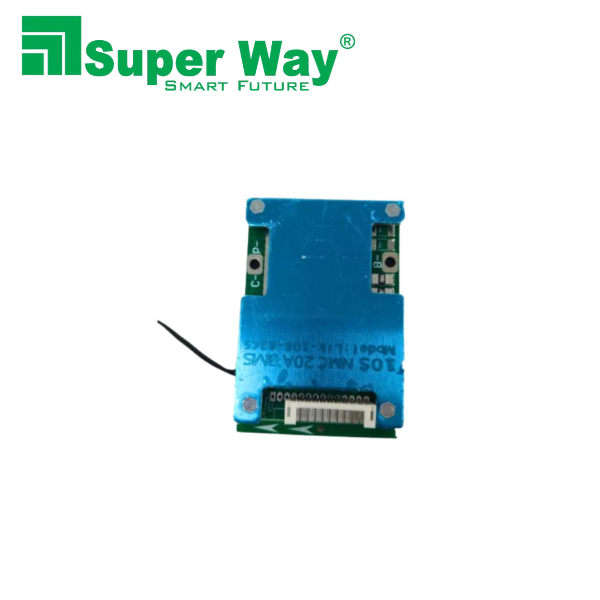
BMS NMC 10S 20A
Original price was: ₹1,000.00.₹330.00Current price is: ₹330.00.
WHOLESALE PRICE
- Designed for compatible NMC lithium battery pack configurations.
- Supports a 10S battery configuration with 10 cell groups connected in series.
- Rated current: 20A, subject to the module’s specifications and operating conditions.
- Designed for battery management in compatible lithium battery applications.
- Helps manage battery operation according to the protection functions built into the circuit.
- Verify voltage compatibility, wiring connections, dimensions, and protection specifications before installation.
Did you like this product? Add to favorites now and follow the product.
Description
The BMS NMC 10S 20A is a battery management system designed for compatible lithium nickel manganese cobalt oxide (NMC) battery packs arranged in a 10-series configuration. A Battery Management System, commonly known as a BMS, is an electronic circuit used to monitor and manage important operating conditions in a rechargeable battery pack. This module is intended for applications where the battery configuration, current requirements, and electrical specifications match the product. Its 10S designation identifies the intended series-cell configuration, while the 20A rating indicates the stated current rating. Before selecting this module, users should confirm the exact battery voltage, cell arrangement, charging requirements, connection method, and protection features specified for the particular unit.
A 10S NMC battery pack contains ten cell groups connected in series. The total pack voltage depends on the voltage characteristics of the individual cells and their state of charge. For conventional NMC lithium-ion cells, the nominal voltage is commonly around 3.6V to 3.7V per cell, while the maximum charging voltage is commonly 4.2V per cell. These values are general characteristics of conventional NMC cells and must not replace the specifications of the cells used in the actual battery pack. A conventional 10S NMC pack therefore has a nominal voltage of approximately 36V to 37V and may reach 42V when fully charged if the selected cells use a 4.2V charging limit. Always confirm the correct voltage range before connecting the BMS.
The primary purpose of a battery management system is to help manage the battery pack’s operation within the limits supported by its circuit design. Depending on the particular model, a BMS may include functions related to overcharge protection, over-discharge protection, overcurrent protection, short-circuit protection, temperature monitoring, or cell balancing. These features are not identical across all BMS products. The precise protection functions of this BMS NMC 10S 20A should be confirmed from the seller’s specifications or the manufacturer’s technical documentation before use. Do not assume that every protection function is included simply because the module is described as a BMS.
The stated 20A rating is an important consideration when matching the module to a battery and its connected equipment. Current requirements depend on the electrical load, motor or device characteristics, operating duration, wiring, connectors, cooling conditions, and the design of the battery pack. The 20A label should not be interpreted as a guarantee that the module can continuously handle 20A under every condition. Check whether the published rating is continuous or refers to a different operating condition, and verify any peak-current limitations before installation. The cells, wiring, connectors, and other components must also be suitable for the expected current.
This BMS may be considered for compatible battery packs used in electronics projects, portable equipment, battery-powered devices, and other applications requiring a suitable 10S NMC battery management circuit. The suitability of the module depends on the requirements of the complete system. Battery capacity alone does not determine whether a BMS is appropriate. The battery’s chemistry, series configuration, maximum charging voltage, discharge current, charging current, and required safety functions must all be considered. A module with the correct series count but an unsuitable current rating or incompatible wiring arrangement should not be used.
Correct wiring is essential for safe and reliable battery operation. Battery management circuits may have dedicated battery-negative, pack-negative, charging, load, and cell-sensing connections. Their arrangement can differ between models, so the terminal labels and connection sequence must be checked against the documentation for the exact board. Do not rely on the appearance of another BMS or a wiring diagram for a similar-looking product. Incorrect connections may damage the board, the battery cells, or connected equipment. If the terminal layout is not clearly documented, obtain the correct connection diagram before installation.
Cell balancing is another feature that buyers should check carefully. In a series-connected battery pack, individual cell groups may gradually develop differences in voltage during charging and discharging. Some BMS designs provide a balancing function to help manage these differences, while other designs do not include balancing. The product name BMS NMC 10S 20A does not establish whether this particular unit supports balancing or what balancing method it uses. Confirm this information before purchasing if balancing is required for the intended battery pack. A BMS should not be treated as a substitute for suitable cell selection, correct pack assembly, or appropriate charging equipment.
The charging equipment must be compatible with the battery chemistry and the full series configuration. For a conventional 10S NMC pack using cells with a 4.2V maximum charging voltage, a compatible charger is typically designed for a 42V charging limit. However, the actual charging voltage and method must be determined from the cell manufacturer’s specifications and the battery pack design. Using an unsuitable charger can create dangerous operating conditions. The charger, BMS, and battery pack should be selected as a compatible system rather than as independent components.
When evaluating this product for a repair or new battery project, compare the board’s dimensions, connector arrangement, terminal labels, mounting requirements, and available documentation with the original component or project design. If replacing an existing BMS, matching only the 10S and 20A labels may not be sufficient. Differences in wiring, charging and discharging paths, balancing functions, or protection thresholds may prevent direct replacement. Check the complete specifications and obtain qualified technical assistance when necessary.
For storage and handling, keep the module protected from moisture, conductive debris, accidental short circuits, and mechanical damage. Avoid placing the circuit where exposed electrical connections can contact metal objects. The battery pack should be assembled using appropriate insulation, correctly rated wiring, suitable connectors, and a proper enclosure where required. Lithium battery work can present fire, electrical, and chemical hazards, so installation and testing should be carried out by a qualified person using suitable procedures and equipment.
The BMS NMC 10S 20A is a configuration-specific component for buyers who need a battery management board compatible with a 10-series NMC battery pack and the stated current rating. Confirming the technical specifications before purchase helps reduce compatibility issues and supports correct system selection. For Electropowerway product listings, the module can be evaluated alongside compatible battery components, connectors, and related electrical accessories, provided their specifications match the project requirements. SUPERWAY may also be used as a product-range reference where appropriate, but the actual manufacturer and branding of this particular board should be verified independently.
Before ordering, confirm the battery chemistry, series count, current rating, charging voltage, balancing requirement, protection functions, physical dimensions, and wiring diagram. These checks are especially important when replacing a board in an existing battery pack. Select the module based on verified technical information rather than appearance alone. When the specifications are confirmed and the board is installed correctly by a qualified person, a suitable BMS can serve as an important part of a properly designed battery management system.
Recently Viewed Products
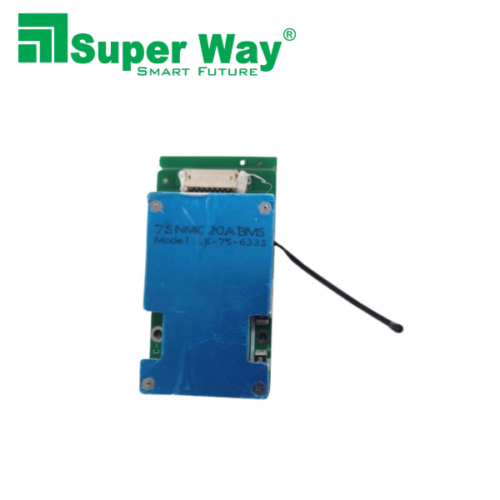
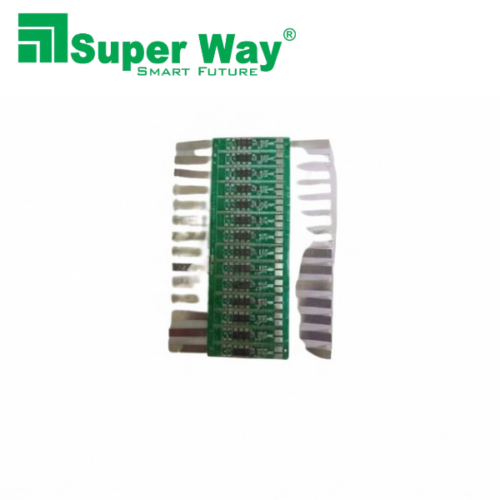
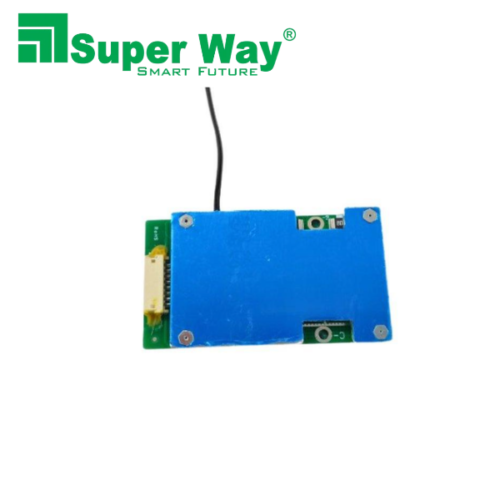

BMS NMC 10S 20A
Original price was: ₹1,000.00.₹330.00Current price is: ₹330.00.
We are committed to quality, innovation, and powering your needs with trusted energy products.
Copyright 2026 © lithiumbatterys.com

Reviews
There are no reviews yet.