

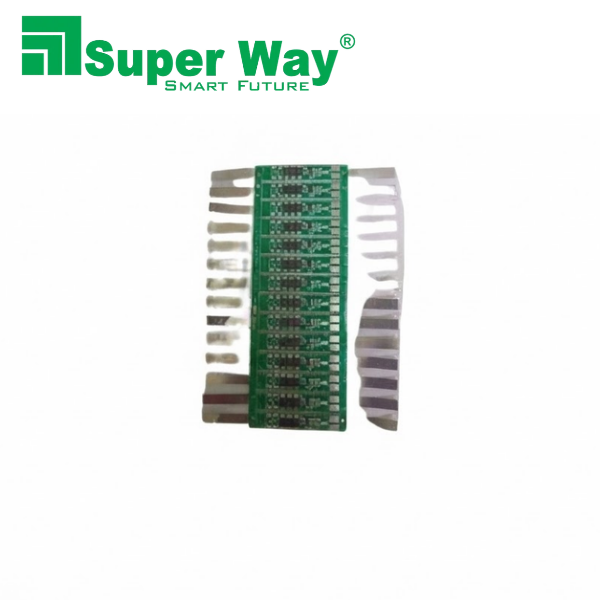
BMS NMC 1S 5A
Original price was: ₹30.00.₹10.00Current price is: ₹10.00.
WHOLESALE PRICE
- Designed for compatible NMC lithium battery configurations.
- Supports a 1S configuration with one cell or one parallel-connected cell group.
- Rated current: 5A, subject to the module’s specifications and operating conditions.
- Intended for battery management in compatible single-series lithium battery packs.
- Protection functions depend on the circuit design of the specific module.
- Verify battery voltage, wiring connections, dimensions, and protection specifications before installation.
Did you like this product? Add to favorites now and follow the product.
Description
The BMS NMC 1S 5A is a battery management system designed for compatible single-series lithium nickel manganese cobalt oxide (NMC) battery applications. A Battery Management System, commonly known as a BMS, is an electronic circuit that helps monitor and manage the operating conditions of a rechargeable battery. The 1S designation indicates a single series cell group, while the 5A rating identifies the stated current rating of the module. This configuration may be suitable for certain compact battery-powered projects when the cell chemistry, voltage range, current requirements, and electrical connections match the board’s specifications.
NMC is a commonly used lithium-ion battery chemistry that combines nickel, manganese, and cobalt in the cathode material. NMC cells are used in various rechargeable battery applications because their characteristics can support different requirements for energy storage, power delivery, and battery pack design. However, individual cells and battery products may have different electrical limits. The correct BMS must be selected according to the exact cell manufacturer’s specifications and the intended application. The product name alone does not confirm every electrical characteristic or protection function of this module.
A 1S battery configuration contains one cell or one group of cells connected in parallel. Parallel-connected cells share the same nominal voltage while their combined capacity and current capability depend on the cells and pack design. For conventional NMC lithium-ion cells, nominal voltage is commonly around 3.6V to 3.7V, with a typical maximum charging voltage of 4.2V per cell. These are general reference values rather than guaranteed specifications for every cell. Always confirm the permitted charging voltage and operating range of the actual battery before selecting a BMS or charger.
The 5A rating is an important factor when matching the module to a battery-powered device. The current drawn by the connected equipment must remain within the limits of the BMS, battery cells, wiring, connectors, and other components. The stated 5A rating should not automatically be interpreted as a guaranteed continuous current under all conditions. Actual capability may depend on the circuit design, temperature, ventilation, installation, and duration of use. Check the technical documentation to establish whether the rating refers to continuous current, peak current, or another specified operating condition.
A battery management circuit can provide functions that help keep a battery within its intended operating limits. Depending on the design, these functions may include overcharge protection, over-discharge protection, overcurrent protection, short-circuit protection, or temperature-related protection. Not every BMS includes every function, and protection thresholds can vary between models. Buyers should confirm the features of this particular BMS NMC 1S 5A using its technical documentation rather than assuming that all standard protections are present.
The single-series configuration makes voltage compatibility especially important. A BMS designed for a 1S battery should not be treated as interchangeable with boards intended for 2S, 3S, or higher series configurations. Those configurations have different voltage requirements and cell-sensing arrangements. Using a board with an incorrect series rating can result in improper operation or damage. Before purchasing, verify that the intended battery consists of a single series group and uses a compatible NMC cell voltage range.
Charging compatibility is another essential consideration. The charger must be designed for the battery chemistry and the maximum voltage permitted by the cell manufacturer. A charger with an unsuitable output voltage or charging profile may create hazardous conditions. The BMS does not replace a correctly specified charger, appropriate cell selection, or safe battery assembly. Confirm the charging method, charging current, and voltage limits before connecting the battery to a power source.
The board’s wiring arrangement must also be verified. Small BMS modules may use specific battery-positive, battery-negative, charging, or load connections, depending on their circuit design. Terminal layouts and connection methods can differ even among boards with similar names. Follow the wiring diagram for the exact module and check all labels before installation. Do not rely on the appearance of another board or assume that similarly positioned terminals have identical functions. Incorrect wiring can damage the BMS and connected battery components.
Cell balancing is generally relevant when multiple cell groups are connected in series because the groups can develop differences in voltage. A 1S configuration does not have multiple series groups to balance against one another, but the precise functions of the board should still be verified from its documentation. Do not assume that a particular balancing circuit, connector, or additional feature is present unless it is explicitly specified for the module.
The BMS NMC 1S 5A may be considered for compatible low-voltage battery projects, portable electronic equipment, and other devices that use a single-series NMC battery configuration. Actual suitability depends on the electrical requirements of the equipment and the characteristics of the battery pack. The 5A rating alone does not establish compatibility with a particular motor, lighting system, electronic circuit, or other load. Consider startup current, operating current, charging requirements, wiring capacity, and the environmental conditions in which the device will operate.
When replacing an existing battery protection board, compare more than the product name. Confirm the series configuration, current rating, terminal arrangement, dimensions, mounting requirements, charging and discharging paths, and available protection functions. A board with the same nominal ratings may still use a different connection layout or have different protection thresholds. Verify the complete specifications before treating it as a replacement.
Proper handling and installation are important for lithium battery systems. Protect the board and exposed terminals from moisture, conductive objects, accidental short circuits, and mechanical damage. Use appropriately rated wires and connectors, suitable insulation, and an enclosure where required by the application. Battery assembly and testing should be carried out by a qualified person using suitable procedures and equipment. Stop installation if the wiring diagram or battery specifications are unclear.
For buyers sourcing battery management components through Electropowerway, the BMS NMC 1S 5A can be evaluated as part of a compatible low-voltage battery assembly. Related battery components should be selected according to verified voltage, current, connector, and physical requirements. SUPERWAY may be referenced in the product description as a product-range name where appropriate, but the actual manufacturer and branding of this particular board should be independently confirmed.
Before ordering, verify the NMC chemistry, 1S configuration, 5A current rating, charging voltage, protection functions, wiring diagram, and physical dimensions. These checks help establish whether the module is appropriate for the intended battery project. Selecting a BMS based on confirmed specifications, rather than appearance alone, supports better compatibility and safer system design. The final installation should follow the battery cell documentation and the instructions supplied for the exact module.
Recently Viewed Products
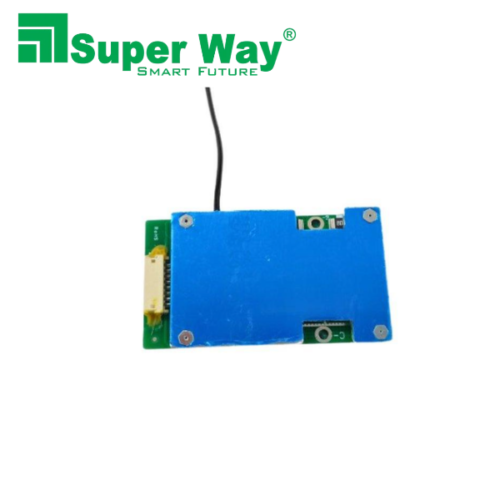

BMS NMC 1S 5A
Original price was: ₹30.00.₹10.00Current price is: ₹10.00.
We are committed to quality, innovation, and powering your needs with trusted energy products.
Copyright 2026 © lithiumbatterys.com

Reviews
There are no reviews yet.