

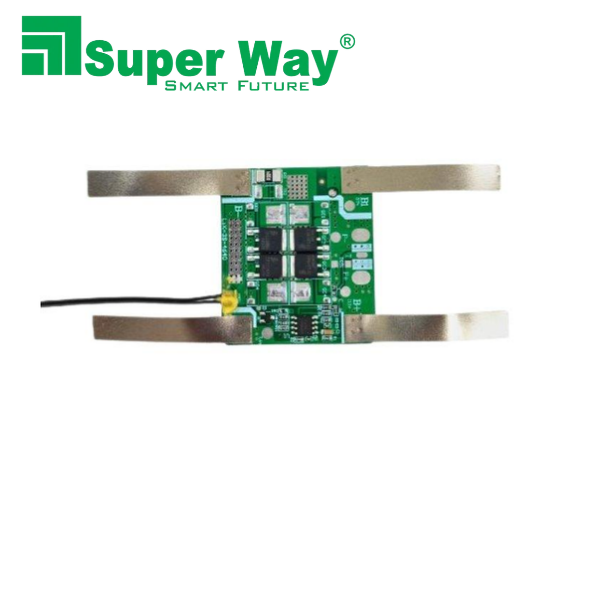
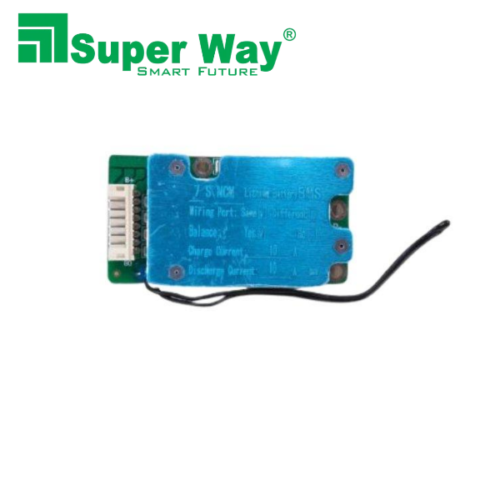
BMS NMC 3S 6A Without Balancing
Original price was: ₹120.00.₹45.00Current price is: ₹45.00.
WHOLESALE PRICE
- Designed for compatible 3S NMC lithium battery configurations.
- Stated current rating of 6A.
- Intended for battery packs with three cells or cell groups connected in series.
- Without balancing function, as specified in the product name.
- Requires compatibility with the battery voltage, charger, and connected load.
- Verify wiring, current limits, dimensions, and protection features before installation.
Did you like this product? Add to favorites now and follow the product.
Description
The BMS NMC 3S 6A Without Balancing is a battery management system designed for compatible three-series-cell NMC lithium battery configurations. The product name specifies a 3S arrangement, a stated current rating of 6A, and a design without a balancing function. These details are important when choosing a battery management board for a battery pack, replacement project, or compatible electronic application. Before purchasing, verify that the board’s specifications match the battery chemistry, series configuration, charging requirements, and current demand of the intended equipment.
NMC refers to lithium nickel manganese cobalt oxide battery chemistry. The 3S designation indicates three cells or cell groups connected in series. In a series arrangement, the total pack voltage depends on the voltage of the individual cells and their state of charge. The 6A marking identifies the stated current rating, which should be checked against the board’s technical documentation to understand the applicable operating conditions. The product name alone does not establish the exact voltage thresholds, dimensions, terminal layout, or all available protection functions.
A battery management system is an electronic component used to manage specified aspects of battery operation. Depending on its circuit design, a BMS may monitor battery voltage and current and control the electrical connection to a load or charging circuit under defined conditions. Different models support different functions, so it is important to confirm the capabilities of the specific board before use. The BMS should be selected as part of a complete battery system that includes compatible cells, an appropriate charger, suitable wiring, and the necessary physical protection.
One of the defining characteristics of this product is that it is specified as being without balancing. Cell balancing is a function used in certain battery management systems to help manage voltage differences between cells in a series-connected battery pack. Since this model is identified as a non-balancing BMS, users should not assume that it actively equalizes the cells. The cells must be suitable for use together, and their condition and voltage compatibility should be assessed according to the battery manufacturer’s instructions. Any separate balancing arrangement, if required by the battery design, must be evaluated independently.
The absence of balancing is an important selection consideration for a 3S battery pack. Cells connected in series may develop differences in voltage or capacity over time because of variations in cell characteristics, usage, temperature, or ageing. Without an active balancing function, the board should not be expected to correct those differences. Users should follow appropriate battery assembly and maintenance procedures and ensure that the selected battery configuration is suitable for operation without BMS balancing. If balancing is required by the battery design, choose a compatible solution that specifically supports that function.
The stated 6A current rating should also be considered carefully. The expected operating current of the connected device must be compared with the board’s documented current limits. The marking should not automatically be treated as a guarantee of continuous operation at 6A under every condition. Actual current capability may depend on the circuit design, operating temperature, wiring, connection quality, and installation environment. Equipment with high startup current or rapidly changing current demand may require additional evaluation before the board is selected.
Charging compatibility is another essential factor. This BMS is intended for a compatible 3S NMC battery arrangement, but the exact charging voltage and current must be determined from the specifications of the cells and the board. A BMS is not necessarily a charger, and its current rating does not establish which charger should be used. Select charging equipment designed for the particular battery configuration and follow the cell manufacturer’s charging instructions. Confirm the board’s documented operating thresholds and supported charging connections before installation.
Protection functions must be verified separately. Depending on the circuit design, a BMS may provide features such as overcharge protection, over-discharge protection, overcurrent protection, or short-circuit protection. However, the product name does not confirm which of these functions are included or their operating thresholds. Review the technical documentation for the exact board rather than assuming that it provides every common protection feature. A BMS is only one part of a battery safety system and does not remove the need for compatible cells, correct wiring, appropriate charging equipment, and suitable insulation.
Correct wiring is critical when installing a three-series-cell BMS. Identify the battery connections, series-group connections, charging terminals, and load terminals from the documentation supplied for the exact model. Connection arrangements and terminal markings can differ between boards, even when their product names appear similar. Do not copy a wiring layout from another BMS unless compatibility has been confirmed. Incorrect connections can damage the board, the battery cells, or connected equipment. If the wiring diagram or terminal identification is unclear, seek assistance from a qualified battery technician.
The cells used in the battery pack should be compatible with one another and suitable for the intended electrical load. Follow the cell manufacturer’s specifications for voltage limits, current limits, charging, discharging, and temperature. The assembled battery should have suitable insulation and mechanical support, and conductors should be secured to reduce the risk of accidental contact. Inspect the board, wires, and battery cells for visible damage before use. If the pack shows signs of electrical malfunction or abnormal heating, discontinue use and have it assessed by a qualified technician.
The BMS NMC 3S 6A Without Balancing may be considered for compatible battery projects where a three-series-cell NMC configuration and a non-balancing BMS meet the design requirements. Its suitability for a particular device depends on the verified current rating, voltage limits, supported protection functions, wiring arrangement, and physical dimensions. Buyers should not assume that the board is suitable for every three-cell lithium battery merely because the series count matches. Battery chemistry and electrical requirements must also be compatible.
For replacement applications, compare the existing board’s specifications with those of the proposed replacement. Check the series configuration, current rating, balancing capability, voltage thresholds, connection layout, and physical dimensions. A board without balancing is not a direct substitute for a balancing model if the original system relies on cell equalization. Likewise, a board with a similar current rating may still have a different connection arrangement or protection design. Confirm the details before purchasing or fitting a replacement component.
For product identification and inventory purposes, the name BMS NMC 3S 6A Without Balancing communicates the stated battery chemistry, three-series-cell configuration, current rating, and absence of balancing. Keeping these details clear in product records can help buyers distinguish it from other BMS models. SUPERWAY may be referenced in the store’s product description, but technical claims should be based on verified information about the actual component being supplied.
In summary, the BMS NMC 3S 6A Without Balancing is identified as a battery management board for compatible three-series-cell NMC lithium battery applications, with a stated current rating of 6A and no balancing function. Before purchase or installation, verify the battery chemistry, voltage requirements, current limits, protection functions, wiring connections, and physical dimensions. Pay particular attention to the absence of balancing and ensure that the overall battery design is suitable for a non-balancing BMS. Correct component selection and installation according to the relevant technical documentation are essential for appropriate operation.
Recently Viewed Products


BMS NMC 3S 6A Without Balancing
Original price was: ₹120.00.₹45.00Current price is: ₹45.00.
We are committed to quality, innovation, and powering your needs with trusted energy products.
Copyright 2026 © lithiumbatterys.com

Reviews
There are no reviews yet.