

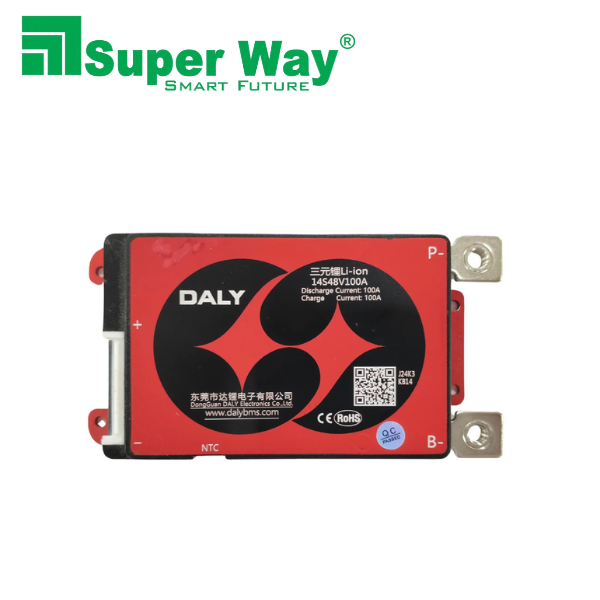
BMS NMC 14S 100A
Original price was: ₹5,000.00.₹2,300.00Current price is: ₹2,300.00.
wholesale price
- Designed for compatible NMC lithium-ion battery packs.
- Supports a 14S series-cell configuration.
- Rated current: 100A, as indicated by the product model.
- Intended for battery pack management applications.
- Requires compatibility with the battery cells, charger, and connected equipment.
- Installation must follow the correct wiring diagram and product specifications.
Did you like this product? Add to favorites now and follow the product.
Description
The BMS NMC 14S 100A is a battery management system intended for compatible nickel manganese cobalt (NMC) lithium-ion battery packs arranged in a 14-series-cell configuration. A Battery Management System, commonly known as a BMS, is an electronic component used to monitor and manage the electrical operation of a rechargeable battery pack. It is an important part of a battery assembly because it helps manage battery operation within the limits supported by the cells and the management system. The 14S designation identifies the intended series configuration, while 100A is the current rating indicated by the product name. These identifiers help users distinguish this component from BMS models designed for different battery configurations and current requirements. Before purchasing or installing this product, users should confirm the detailed specifications and verify compatibility with their intended battery pack.
NMC stands for nickel manganese cobalt, a lithium-ion battery chemistry used in a variety of rechargeable battery applications. NMC cells are available in different capacities, dimensions, voltage limits, and discharge capabilities. A battery pack must be designed around the specifications of the cells used, the operating requirements of the equipment, and the intended charging method. The BMS must match the battery chemistry and series arrangement while meeting the current and protection requirements of the complete system. The BMS NMC 14S 100A is intended for applications requiring a compatible 14-series-cell management system. The series count and current rating alone do not guarantee compatibility, so the battery-cell documentation and exact BMS specifications should be checked before selection.
The 14S configuration means that fourteen cell groups are connected in series. In a series-connected battery pack, the voltage of each cell group contributes to the total pack voltage. The actual operating voltage and charging limits depend on the specifications of the individual cells and the design of the complete battery pack. The selected BMS must support the required voltage range and appropriate cell-level limits for the chosen NMC cells. Users should confirm the supported pack voltage, charging requirements, cell-sensing arrangement, and connection layout through the relevant product documentation. These specifications should not be estimated from the series count alone.
The 100A rating is a key consideration when selecting this BMS for a particular application. It represents the current rating indicated by the product name, but it does not independently establish continuous-current capability, peak-current duration, operating temperature limits, or cooling requirements. These details depend on the specific model’s documented design. Users should evaluate the expected current demand of the connected equipment and determine whether the BMS is suitable for those operating conditions. The battery cells, wires, connectors, busbars, and other electrical components must also be appropriately rated for the intended load. Selecting every component according to the system requirements helps ensure that the complete assembly is suitably designed.
A battery management system may include functions such as overcharge protection, over-discharge protection, overcurrent protection, short-circuit protection, temperature monitoring, or cell balancing. However, the exact functions available depend on the particular model and must be verified through its documentation. Cell balancing, when supported, helps manage differences between the voltage levels of series-connected cell groups under specified operating conditions. Its availability, balancing current, activation thresholds, and method of operation should be confirmed before use. Temperature sensors, communication interfaces, and configurable settings should also be checked separately if they are required for the intended application.
Correct installation is essential when integrating a BMS into a battery pack. The positive and negative connections, cell-sensing wires, charging connections, and discharge connections must follow the wiring diagram supplied for the exact model. Incorrect wiring can damage the circuit, interfere with battery monitoring, or create a safety hazard. Users should verify terminal markings and connector positions instead of relying on wire colours or the arrangement used by another BMS. The battery should be disconnected from chargers and loads while connections are being inspected, and appropriate electrical safety procedures should be followed during installation and testing.
The charging equipment must be compatible with the complete 14S NMC battery pack. The charger should use the charging profile and voltage limits specified for the selected cells. A BMS does not replace a compatible charger, correctly specified battery cells, suitably rated wiring, or additional protective measures required by the complete battery design. Before the battery pack is operated, the installer should verify polarity, insulation, terminal connections, and the compatibility of all components. If the wiring diagram or installation instructions for the exact model are unavailable, obtain the correct documentation before proceeding.
When selecting a replacement BMS, it is important to compare more than the series count and current rating. Other relevant factors may include the supported chemistry, voltage range, physical dimensions, terminal arrangement, connector type, sensing-wire layout, and available protection functions. Products with similar ratings may have different wiring arrangements or operating characteristics. A replacement should be used only after its electrical and physical compatibility with the existing battery pack has been confirmed. This is especially important when replacing a component that uses a specific sensing harness or connection layout.
For product identification and inventory management, the BMS NMC 14S 100A can be distinguished by its NMC chemistry designation, 14-series-cell configuration, and stated 100A current rating. These identifiers provide a starting point for comparing battery management systems for compatible rechargeable battery assemblies and electronic projects. Customers should confirm the detailed voltage limits, current capabilities, protection functions, and installation requirements before selecting the product. If the application requires specific communication features, temperature monitoring, or balancing functions, those requirements should also be verified against the product documentation.
SUPERWAY product listings help customers identify battery management components for battery-related projects and electronic assemblies. When considering the BMS NMC 14S 100A, customers should confirm that the product matches the battery cells, series arrangement, expected current demand, and charging system. Applications with different series configurations or current requirements may need a different BMS model. Checking the technical specifications before ordering helps users compare compatible components and make a more informed purchasing decision.
In summary, the BMS NMC 14S 100A is intended for compatible NMC lithium-ion battery packs arranged in a 14-series-cell configuration, with a 100A rating indicated by its product name. Its suitability depends on the specifications of the battery cells, the electrical demands of the connected equipment, the documented protection functions, and the installation requirements. Verifying these details before use helps support appropriate component selection and the safe operation of the complete battery assembly.
Recently Viewed Products

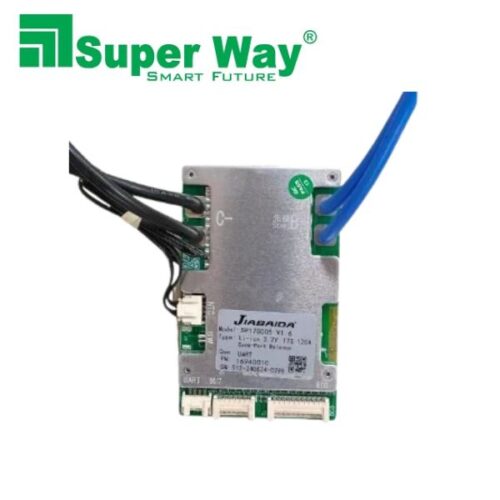
JBD 10-17S 150A SMART BMS SP17S005
Original price was: ₹4,600.00.₹2,100.00Current price is: ₹2,100.00.
BMS NMC 14S 100A
Original price was: ₹5,000.00.₹2,300.00Current price is: ₹2,300.00.
We are committed to quality, innovation, and powering your needs with trusted energy products.
Copyright 2026 © lithiumbatterys.com

Reviews
There are no reviews yet.