

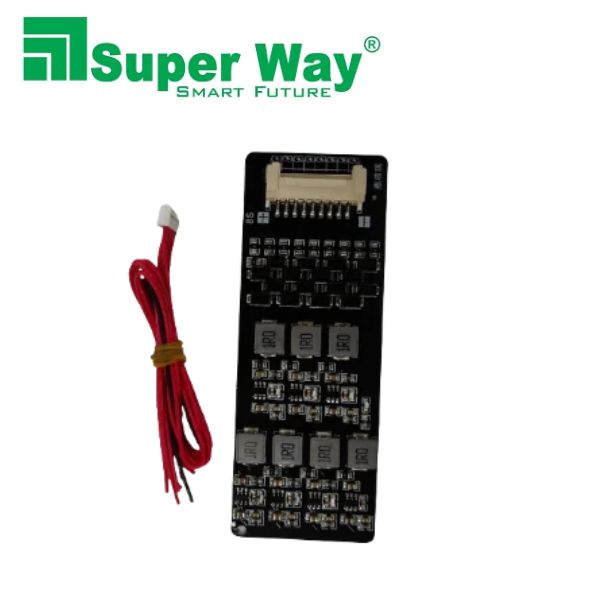
8S 2A Inductive Active Battery Balancer – NEEY DG-8S
Original price was: ₹1,000.00.₹600.00Current price is: ₹600.00.
WHOLESALE PRICE
- Designed for compatible 8S battery configurations.
- Inductive active battery balancing technology.
- Specified peak balancing current of 2A.
- Transfers energy between adjacent battery cells.
- No external power supply required for balancing operation.
- Compatible with specified NCM and LiFePO4 battery applications.
Did you like this product? Add to favorites now and follow the product.
Description
The NEEY Active Balancer 8S 2A DG-8S is an inductive battery balancing device designed for compatible 8-series rechargeable lithium battery packs. It uses active energy transfer technology to help manage voltage differences between individual battery cells. With a specified peak balancing current of 2A and support for an 8S configuration, this model provides a battery balancing solution for compatible NCM and LiFePO4 battery applications.
This product is sold under the SUPERWAY brand and carries the original NEEY product branding. It is designed for battery systems where maintaining voltage consistency between individual cells is an important consideration. Its inductive balancing technology transfers energy between neighbouring cells rather than simply dissipating excess energy as heat.
Inductive Active Battery Balancing Technology
Rechargeable battery packs contain multiple individual cells connected in series to achieve the required voltage. During regular charging and discharging, voltage differences can develop between individual cells due to variations in cell characteristics, internal resistance and operating conditions.
The NEEY DG-8S 2A uses an inductive energy transfer method with a matrix transformer. This technology transfers energy between neighbouring battery cells to help manage voltage differences within the battery pack.
Unlike passive balancing systems that dissipate excess energy as heat, inductive active balancing transfers energy from a relatively higher-voltage cell towards its neighbouring lower-voltage cell. This helps maintain better voltage consistency between compatible battery cells.
8S Battery Configuration
The NEEY Active Balancer DG-8S is designed for an 8S battery configuration. The term 8S refers to eight individual battery cells connected in series.
Selecting the correct series configuration is essential when choosing a battery balancing device. The balancer must match the electrical arrangement of the battery pack to operate according to its intended design.
This model is intended for compatible 8-series rechargeable battery packs. Before installation, users should verify the battery chemistry, individual cell voltage, total battery pack voltage and wiring arrangement.
2A Peak Balancing Current
One of the important specifications of this model is its peak balancing current of 2A.
Balancing current refers to the current involved in transferring energy between battery cells during the balancing process. The NEEY DG-8S 2A uses inductive energy transfer to manage voltage differences between adjacent cells.
According to the product specifications, the balancing current varies with the voltage difference between neighbouring cells:
- 0.5A–0.7A when the voltage difference is between 0.1V and 0.2V.
- Up to 2A when the voltage difference exceeds 0.2V.
The actual balancing current depends on the voltage conditions of the connected battery pack. The 2A specification represents the peak balancing current rather than continuous operation at that level.
Compatible Battery Chemistry
The NEEY DG-8S 2A is designed for compatible NCM lithium-ion and LiFePO4 battery applications.
NCM lithium-ion and lithium iron phosphate batteries have different voltage characteristics and charging requirements. Selecting a balancer that supports the intended battery chemistry is therefore important.
The specified individual cell voltage range is 3.0V to 4.2V. Users should verify the chemistry and voltage requirements of their battery pack before connecting the device.
Automatic Balancing Operation
The NEEY DG-8S 2A is designed to operate automatically according to voltage differences between neighbouring cells.
The balancing process starts when the voltage difference between adjacent cells exceeds 0.1V and stops when the difference falls below 0.03V.
This automatic operation helps manage cell voltage differences without requiring manual balancing adjustments or a separate configuration application.
The typical balancing accuracy is specified at a 30mV neighbouring-cell voltage difference.
No External Power Supply Required
An important feature of the NEEY DG-8S 2A is that it does not require a separate external power supply for its balancing operation.
The device uses energy from the connected battery pack to perform its inductive balancing function. This simplifies the power arrangement and eliminates the need for an additional external supply connection.
Its specified standby current is just 10µA, helping keep standby power consumption very low when the balancing circuit is inactive.
Compact Design and Physical Dimensions
The NEEY DG-8S 2A features a compact circuit board design intended for compatible 8S battery pack applications.
Its specified physical dimensions are 87mm in length and 32mm in width, with an approximate weight of 20 grams.
The compact construction makes it suitable for battery assemblies where installation space is an important consideration.
The board uses FR-4 PCB material and a lead-free solder finish. Its operating temperature range is specified from -20°C to +60°C.
Applications of NEEY Active Balancer
The NEEY Active Balancer 8S 2A can be considered for compatible rechargeable lithium battery applications where active cell balancing is required.
Potential applications include:
- 8S lithium-ion battery packs.
- Compatible LiFePO4 battery assemblies.
- Rechargeable energy storage systems.
- Custom lithium battery configurations.
- Battery development and maintenance projects.
- Compatible multi-cell battery applications.
The final suitability depends on battery chemistry, series configuration, cell voltage and the electrical requirements of the complete battery system.
Importance of Battery Cell Balancing
Cell balancing is an important consideration in rechargeable battery packs containing multiple series-connected cells. Individual cells may develop different voltage levels during normal charging and discharging cycles.
When cell voltages become different, some cells may reach their charging or discharging limits earlier than others. This can affect the overall operation of the battery pack.
An active balancer helps manage these differences by transferring energy between neighbouring cells. Maintaining better voltage consistency supports more balanced operating conditions across the battery assembly.
Installation and Compatibility Considerations
Before installing the NEEY DG-8S 2A, confirm that the battery pack has the required 8S configuration and supported battery chemistry.
Check the balance wire arrangement, battery terminal connections and individual cell voltage requirements. Incorrect wiring or reversed connections may damage the balancing device or connected battery components.
Installation should be carried out carefully by someone familiar with rechargeable lithium battery systems. Always follow the manufacturer’s wiring diagram and verify all connections before operation.
The device should be used as a battery balancing component and not as a replacement for a complete battery management system.
Why Choose NEEY Active Balancer from SUPERWAY?
The NEEY Active Balancer 8S 2A DG-8S provides an inductive active balancing solution for compatible eight-series battery configurations. Its 2A peak balancing current, automatic balancing operation and compact circuit board design make it an option for battery builders, technicians and users working with suitable lithium battery systems.
SUPERWAY offers this product for customers looking for NEEY battery balancing components for compatible rechargeable battery applications.
With its 8S configuration, inductive energy transfer technology and operation without an external power supply, this model is designed to help manage voltage differences between neighbouring battery cells.
Customers should verify the battery chemistry, voltage requirements, series configuration and connection compatibility before purchasing and installing the product.

8S 2A Inductive Active Battery Balancer – NEEY DG-8S
Original price was: ₹1,000.00.₹600.00Current price is: ₹600.00.
We are committed to quality, innovation, and powering your needs with trusted energy products.
Copyright 2026 © lithiumbatterys.com

Reviews
There are no reviews yet.