

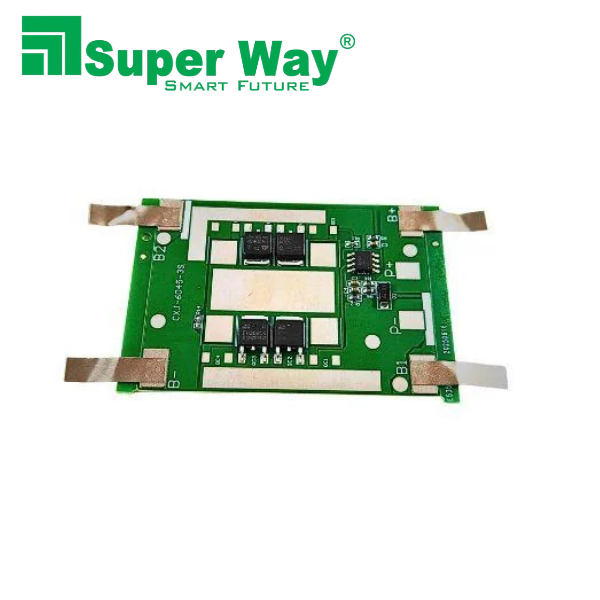
BMS NMC 3S 10A Without Balancing (CXJ-6045)
Original price was: ₹150.00.₹40.00Current price is: ₹40.00.
WHOLESALE PRICE
- Product Type: Battery Management System (BMS) for compatible NMC lithium-ion battery packs.
- Cell Configuration: Designed for a 3S battery pack with three cells or cell groups connected in series.
- Current Rating: Specified 10A rating; verify continuous and peak current limits before use.
- Nickel Included: Supplied with nickel strips according to the product configuration.
- Without Balancing: Identified as a non-balancing BMS model.
- Model Identification: Model code CXJ-6045; confirm wiring, voltage limits, and terminal connections before installation.
Did you like this product? Add to favorites now and follow the product.
Description
The BMS NMC 3S 10A Without Balancing (CXJ-6045) is a battery management system intended for compatible NMC lithium-ion battery packs arranged in a three-series-cell configuration. A battery management system, commonly called a BMS, is an electronic component that helps monitor and manage battery operating conditions according to its circuit design. This product is identified by its 3S configuration, stated 10A current rating, nickel-strip inclusion, and non-balancing design. These specifications help buyers identify the intended battery configuration and compare the product with the requirements of a rechargeable battery application.
NMC stands for nickel manganese cobalt, a type of lithium-ion battery chemistry used in many rechargeable power applications. A 3S battery pack consists of three cells or cell groups connected in series. This arrangement increases the total pack voltage compared with a single cell, while the overall capacity in ampere-hours depends on the cells and their arrangement. The BMS must be suitable for the chemistry and series configuration of the battery pack. Before selecting this product, confirm that the intended battery uses NMC chemistry and requires a three-series-cell management circuit.
The stated 10A current rating is an important consideration when choosing this BMS. It should be compared with the expected current demand of the connected equipment and the permitted current of the battery cells. The exact continuous current rating, peak current capability, and operating conditions should be confirmed through the manufacturer’s specifications. Actual current handling may depend on the circuit design, temperature, wiring, connectors, and installation conditions. The battery cells, wires, connectors, and other electrical components must also be suitable for the intended load. A stated current rating alone does not guarantee compatibility with every application.
This product is identified as a BMS without balancing. Battery balancing is a function that helps manage differences in voltage between individual series-connected cell groups. Because this model is specified as a non-balancing version, buyers should not assume that it can perform cell balancing. This distinction is important when selecting a BMS for a multi-cell battery pack. The requirements of the battery design, charging method, and cell manufacturer’s instructions should be considered before choosing a non-balancing model. If balancing is required by the intended system, select a compatible BMS specifically documented to provide that function.
The product name also indicates that nickel strips are included. Nickel strips are commonly used as interconnection materials in battery pack assembly, depending on the battery design and the supplied product configuration. The exact dimensions, material composition, quantity, and suitability of the included nickel strips should be verified from the seller’s specifications if these details are important to the project. Their inclusion does not remove the need to use appropriate assembly methods and materials for the selected cells. Battery pack construction should follow the cell manufacturer’s recommendations and be carried out by someone with the necessary knowledge and equipment.
The model code CXJ-6045 provides an additional identifier for distinguishing this product from other BMS boards. When ordering a replacement or comparing available options, check the complete model code together with the series configuration, current rating, balancing capability, and terminal arrangement. Products with similar names or appearances may have different electrical characteristics. The model code should be matched with the product information supplied by the seller to reduce the risk of selecting an incompatible component.
A BMS such as this may be considered for compatible rechargeable battery packs and battery-powered projects that require a 3S NMC configuration and a suitable 10A-rated management circuit. Whether it is appropriate for a particular application depends on the battery voltage, expected load, cell specifications, protection requirements, and system design. Buyers should review the electrical requirements of the intended equipment before purchasing. Applications with changing current demand or high startup current require particular attention to the BMS’s documented current limits and the ratings of the other components.
Before installation, verify the board’s wiring diagram, terminal labels, connection sequence, polarity, and supported operating voltage. Confirm that the battery cells are suitable for use together and that the assembled pack follows the required three-series configuration. Incorrect wiring or reversed connections can damage the board or cells. Do not rely solely on wire colour or on the connection arrangement of a different model. Follow the manufacturer’s instructions for the exact CXJ-6045 version.
A battery management system is only one component of a complete battery assembly. It does not replace the need for compatible cells, a suitable charger, correctly rated wiring, and appropriate pack construction. The charger must be designed for the battery chemistry and series configuration, and its charging parameters must follow the battery cell manufacturer’s requirements. Since this model is identified as without balancing, buyers should pay particular attention to the requirements for maintaining the battery pack’s cell voltages. If the application requires balancing, this model may not be the appropriate choice.
Careful installation and inspection are important when working with lithium-ion batteries. Check the battery cells, BMS board, wires, and connectors for damage before assembly. Use appropriately rated conductors and secure electrical connections, and protect the circuit from moisture, conductive debris, and accidental contact with exposed terminals. Avoid short circuits and incorrect polarity. If the battery pack or its wiring shows signs of damage or abnormal operation, discontinue use and have the system inspected by a qualified technician.
Superway provides product listings for customers looking for battery management systems and related electrical components. The BMS NMC 3S 10A Without Balancing (CXJ-6045) listing helps buyers identify a product by its battery configuration, stated current rating, balancing type, and model code. Before ordering, compare the exact product specifications with the intended battery pack and connected equipment. Confirm any details not explicitly listed, including protection functions and the specifications of the supplied nickel strips, with the seller or manufacturer.
Overall, the BMS NMC 3S 10A Without Balancing (CXJ-6045) is intended for compatible three-series NMC lithium-ion battery packs, with a stated 10A current rating and nickel strips included according to the product configuration. Its non-balancing design is an important selection consideration. Checking the battery chemistry, series count, current requirements, wiring connections, and balancing needs helps buyers determine whether this component is suitable for their intended battery application.

BMS NMC 3S 10A Without Balancing (CXJ-6045)
Original price was: ₹150.00.₹40.00Current price is: ₹40.00.
We are committed to quality, innovation, and powering your needs with trusted energy products.
Copyright 2026 © lithiumbatterys.com

Reviews
There are no reviews yet.