


BMS NMC 5S 10A
Original price was: ₹1,000.00.₹300.00Current price is: ₹300.00.
WHOLESALE PRICE
- Designed for compatible 5S NMC lithium-ion battery pack configurations.
- Features a specified current rating of 10A.
- Supports battery management for five series-connected cell groups.
- Intended for use with compatible NMC lithium-ion battery chemistry.
- Requires compatible charging voltage and battery configuration.
- Verify the wiring diagram, protection functions, and operating limits before installation.
Did you like this product? Add to favorites now and follow the product.
Description
The SUPERWAY BMS NMC 5S 10A is a battery management system designed for compatible five-series (5S) NMC lithium-ion battery pack applications. A Battery Management System, commonly known as a BMS, is an electronic component used to manage and monitor battery operation according to its design and specifications. This model is identified by its 5S configuration and stated 10A current rating, making these two specifications important when checking its suitability for a particular battery project.
NMC stands for nickel manganese cobalt, a type of lithium-ion battery chemistry used in rechargeable battery systems. A 5S battery pack contains five cell groups connected in series. Because the groups are connected in series, selecting a compatible BMS requires attention to the number of series-connected groups, battery chemistry, voltage range, charging requirements, and intended operating current. A BMS intended for a different series configuration should not be substituted without confirming that it is suitable for the battery pack.
The 10A rating is a key detail when evaluating this model. It should be compared with the expected current drawn by the connected equipment and the charging current supplied by the charger. However, the product name alone does not establish whether 10A refers to continuous current, peak current, or another rating condition. Always consult the technical documentation for the exact current limits and operating requirements. The battery cells, wiring, connectors, and other components must also be suitable for the intended current.
A BMS can help manage battery operation within its specified limits. Depending on its design, a particular model may provide functions related to overcharge, over-discharge, overcurrent, short-circuit conditions, or other operating parameters. These functions should not be assumed to be present in this specific model unless confirmed by the manufacturer’s documentation. Reviewing the product specifications before purchase helps prevent confusion about the functions provided by the board.
Voltage compatibility is especially important for a 5S NMC battery pack. The total voltage depends on the characteristics of the selected cells and their state of charge. The charging voltage must match the battery chemistry and the number of series-connected cell groups. Do not select a charger based solely on the BMS current rating. Check the battery manufacturer’s charging requirements and confirm that the BMS is designed for the same configuration before connecting the system.
When planning a battery assembly, begin by confirming that the cells are compatible NMC cells arranged in a 5S configuration. Then check the nominal voltage, maximum charging voltage, capacity, expected load current, and charger specifications. Compare these details with the BMS documentation, including the terminal layout and wiring diagram. The BMS must be connected according to the specified arrangement; incorrect wiring or reversed connections may damage the board or connected battery components.
The installation environment also deserves attention. Battery management components should be installed in a suitable enclosure with appropriate insulation and protection from accidental contact, conductive debris, moisture, and other conditions that could cause electrical faults. The installation should provide the operating conditions required by the product documentation. Avoid modifying the circuit, bypassing protective functions, or using the board beyond its documented limits.
A BMS is one part of a complete battery system rather than a replacement for correct battery design. Suitable cells, a compatible charger, correctly rated conductors, appropriate connectors, insulation, and a properly designed enclosure are also necessary. The overall system must be designed around the requirements of the connected equipment. If the battery pack’s wiring arrangement or the BMS terminal identification is unclear, seek assistance from a qualified battery technician before installation or testing.
The SUPERWAY BMS NMC 5S 10A may be considered for compatible rechargeable battery projects where a five-series NMC configuration and the documented 10A rating meet the application’s requirements. Possible project types depend on the electrical needs of the equipment and the exact capabilities of the selected BMS. Application suitability cannot be determined from the model name alone, so confirm the full specification sheet before using it in a particular device.
For customers comparing battery management systems, the main points to review include chemistry compatibility, series configuration, current rating, charging requirements, protection functions, terminal arrangement, and physical dimensions. It is also useful to confirm what is included in the package, since wiring accessories, nickel strips, connectors, and other assembly materials may vary between listings. Do not assume that accessories are included unless they are explicitly identified in the product details.
SUPERWAY provides this BMS option for customers looking for battery management components for compatible lithium-ion battery assemblies. The product name identifies the unit as a 5S NMC BMS with a stated 10A rating. Before ordering, compare these details with your battery pack and connected equipment, and confirm the exact electrical specifications and included components. Correct selection and installation help ensure that the battery system operates within the limits defined for its components.
If this model is being purchased as a replacement, compare it with the original BMS specification rather than relying only on board appearance or connector position. Even boards with similar layouts can differ in voltage settings, wiring sequences, current limits, and protection functions. Confirm the original battery configuration and the replacement unit’s documentation before making the connection. These checks are important for selecting an appropriate component and avoiding compatibility problems during installation.
Recently Viewed Products

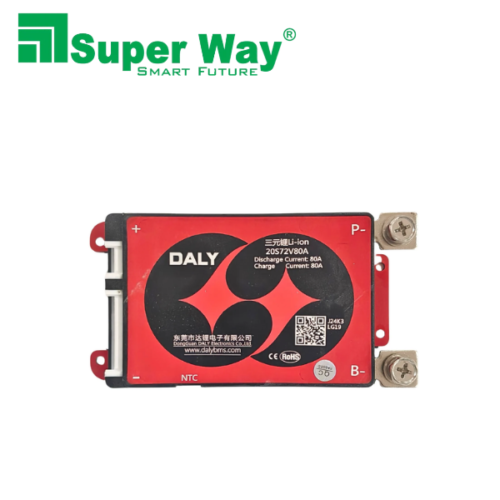

BMS NMC 5S 10A
Original price was: ₹1,000.00.₹300.00Current price is: ₹300.00.
We are committed to quality, innovation, and powering your needs with trusted energy products.
Copyright 2026 © lithiumbatterys.com

Reviews
There are no reviews yet.